Setting the Stage
(Mise en Place)
Disables screen from falling asleep. You can change this later with the ⚙️ icon in the menu bar.
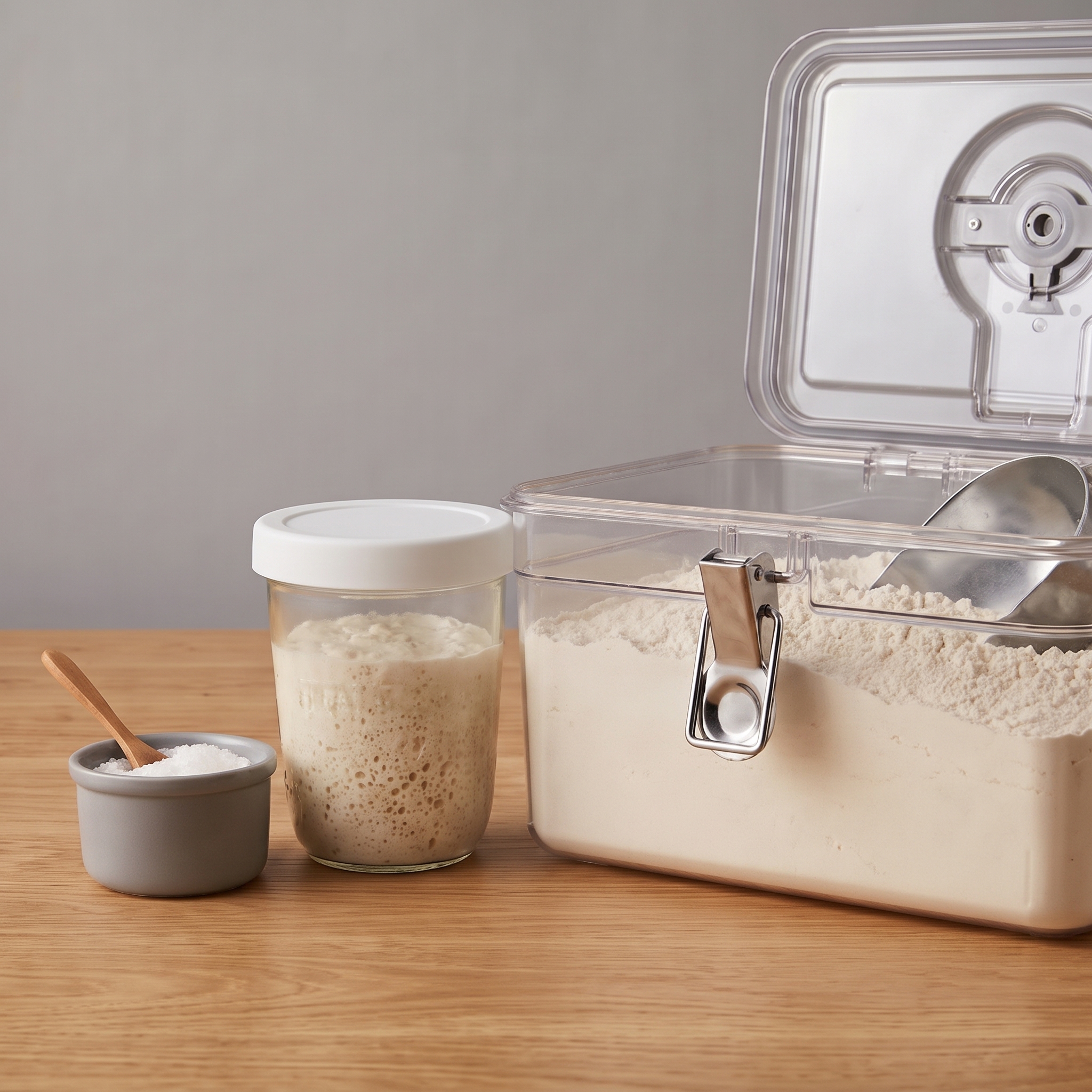
In case you missed it, scroll back up to review how much starter you’ll need and what other ingredients to have on hand. Make sure your starter is ripe and ready to go!

On bake day, your indoor temperature should be at least 68°F (20°C) for proper dough rise. Use a heater or warm spot if needed. The ideal temperature is 75–82°F (24–28°C); do not exceed 85°F (29°C).
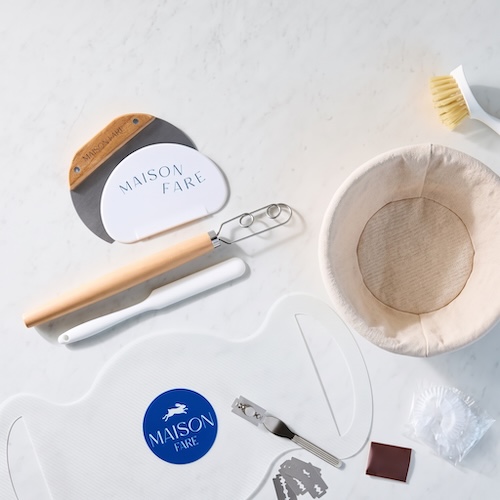
Ensure you have all the "must-haves" from our artisan toolkit ready to go. Most are included in the Maison Fare Sourdough Set.
In addition:
- A Dutch oven or loaf pan, depending on the loaf you selected for the recipe
- A mixing bowl (any large bowl is fine) or stand mixer with dough hook
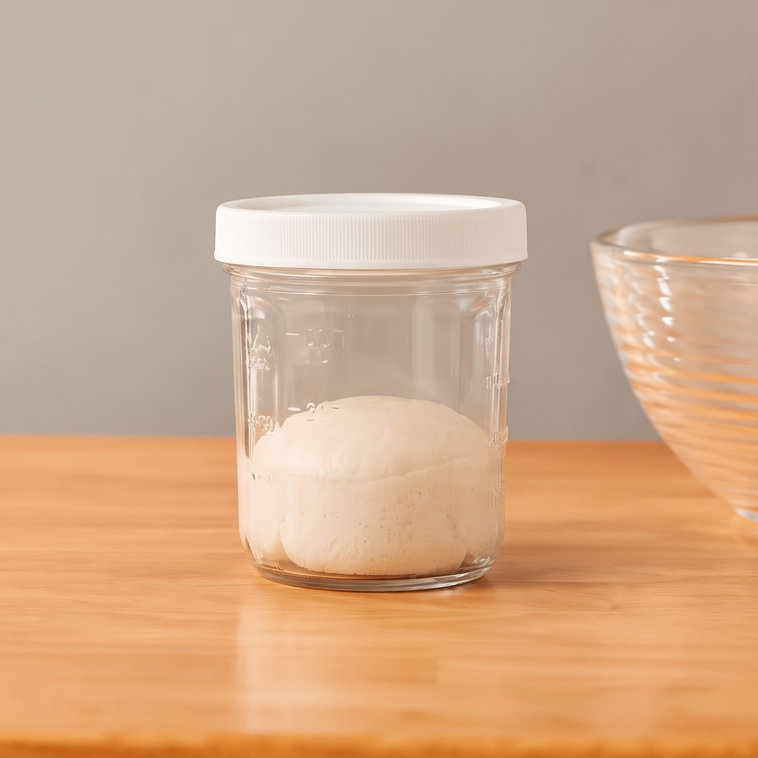
- a 6-12oz, ideally straight sided, container (mason jar, drinking glass, tupperware, etc.) for rising your levain
- Precision kitchen scale set to grams (g)
SAMPLE SCHEDULE
The sourdough baking process blends hands-on steps with time for natural fermentation to do its work.
Let's take a look at a sample schedule to get an idea of the journey ahead.
Day 1

Mix and knead by hand a stiff Levain, a "pre-ferment" that builds strength and flavor before the main dough is mixed. Then, wait until it doubles in size, 4-6 hours depending on room temperature.
Mixing usually takes 15-30min and can be done by hand or with a stand mixer.
For an artisan round (boule) baked in a dutch oven, this begins the first & longest Rise, called the Bulk Fermentation. Expect 5-8 hours depending on room temperature.
For our pan loaf recipe, expect one long Rise. This loaf won't need shaping or proofing and can go into the fridge after 5-7 hours of room temperature.
Note: this step is skipped for the pan loaf.
For the boule, you will need to Shape your loaf and set it down for a second rise, called the Proof, which takes 2-3 hours.
Your loaf will continue developing flavor overnight while fermentation slows down, giving you flexibility to bake tomorrow or the next day.
Day 2 / 3
Whenever is convenient for you, you will Pre-heat your oven for 30 minutes, take your loaf out of the fridge and Score it, and immediately Bake!
After a short rest, it’s time for your first slice of Fresh Bread.
*Actual times will vary based on your kitchen temperature and starter activity. Your bake may go faster or slower than this sample schedule.
More detailed temperature-based timing estimates are provided in relevant recipe steps.
Prepare Levain
A levain, also called a pre-ferment, is like kick-start for the bread we're about to make. Instead of adding your usual starter directly to the main dough, we first make a stiff levain with less water to keep acidity in check and protect the dough’s strength, while building additional fermentation power and flavor.

Make sure your starter has peaked and is bubbly.
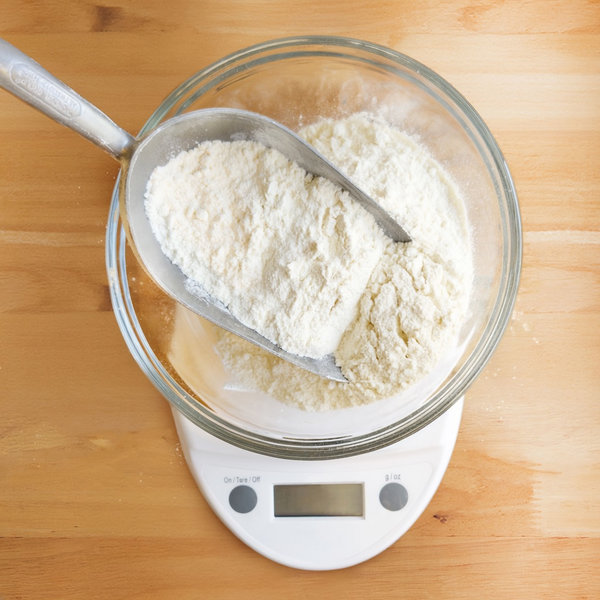
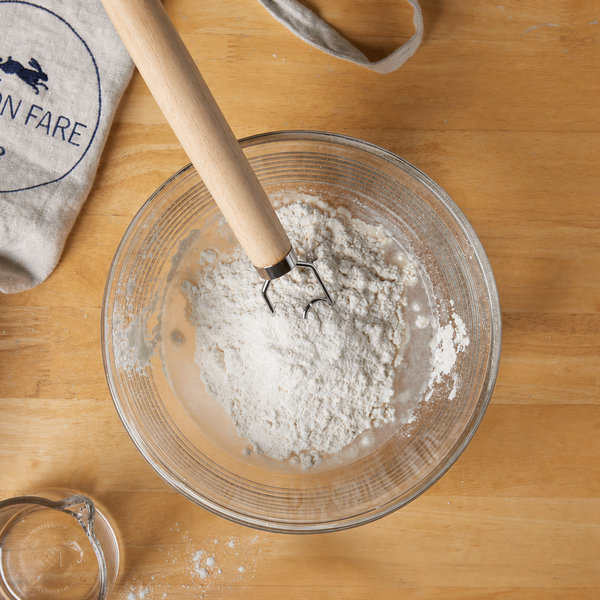
Weigh out 26g of starter into a small mixing bowl, and add 28g of water (90-110°F). If you can't hold your finger in the water for 5 seconds, it's too hot.
Scroll
