Step II
Step I

Mixing & Kneading with a Stand Mixer

Your levain should now be active and noticeably expanded. Take a moment to notice its smell and texture before we move on.

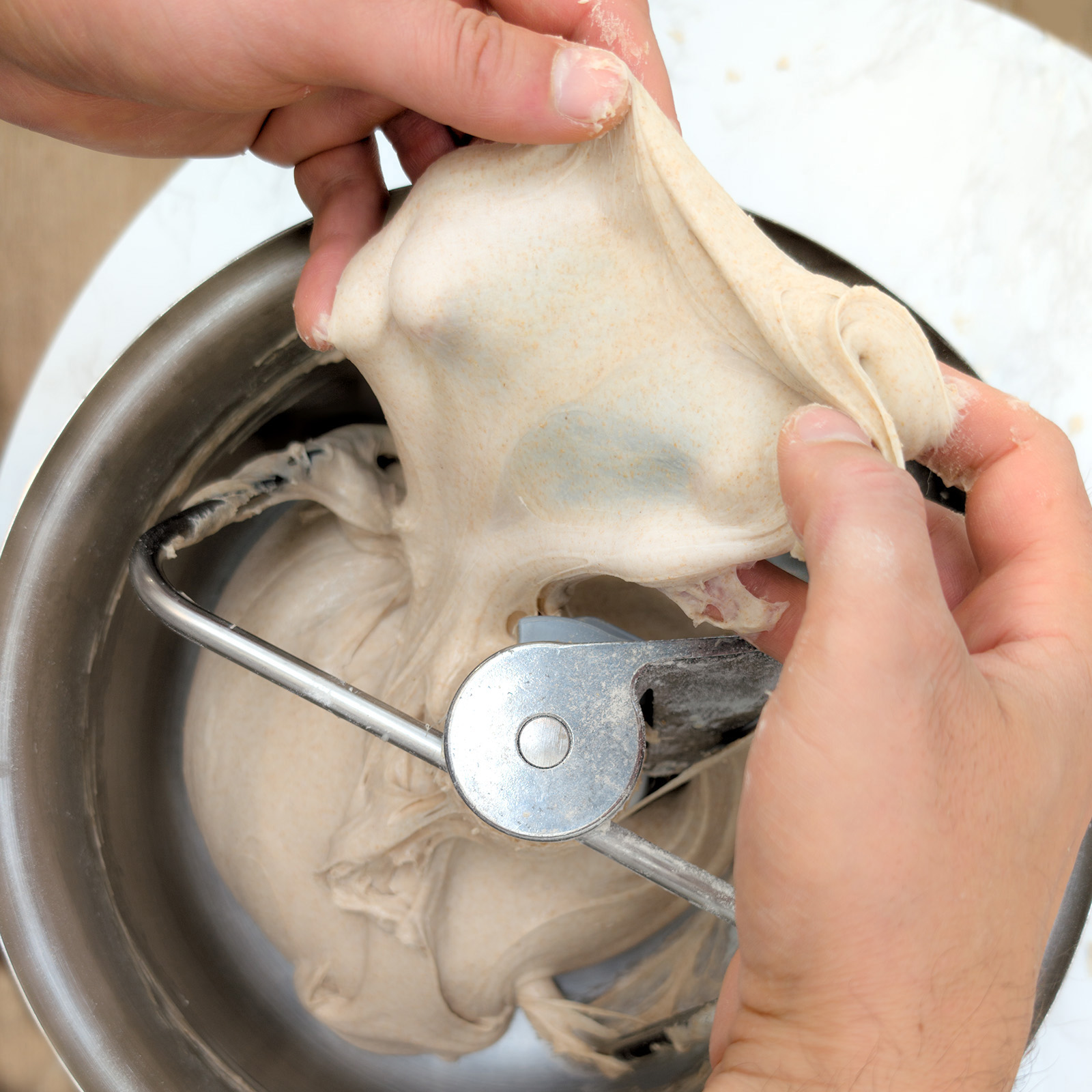
Next, we’ll combine it with the remaining ingredients and knead the dough to develop strength and structure. This helps the dough hold onto the gas produced during fermentation, so it can rise well and develop a light, open crumb.

Many sourdough recipes rely on time and folding alone to develop dough strength, but we use kneading because we find it a more reliable path to a strong dough, good rise (oven spring), and beautiful open crumb.

Your starter should be ripe, active, and ready to go.

We’ll mix it directly into the remaining ingredients, then knead the dough to develop strength and structure. This helps the dough hold onto the gas produced during fermentation, so it can rise well and develop a light, open crumb.

Many sourdough recipes rely on time and folding alone to develop dough strength, but we use kneading because we find it a more reliable path to a strong dough, good rise (oven spring), and beautiful open crumb.

01
01
/
06
01 / 06
Weigh Out Water

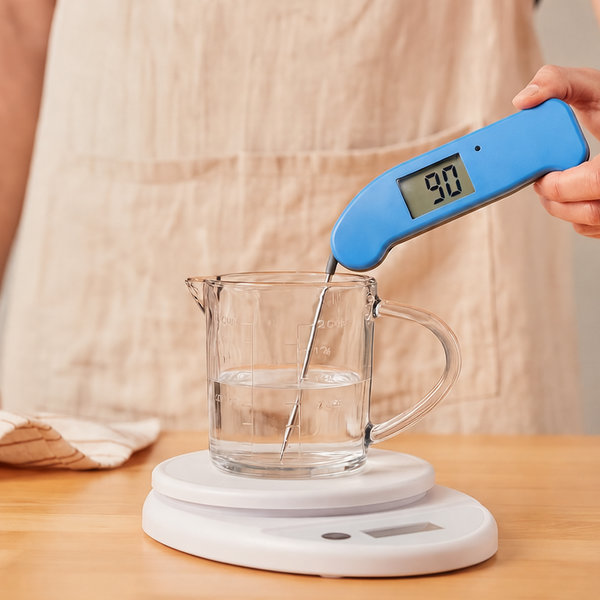
Take out your mixing bowl and scale, and weigh out 409g of warm water, 80-90°F temp, into your mixing bowl. It should feel lukewarm, not hot. Mixers add heat, so using hot water may overheat and kill the microbes in your dough.
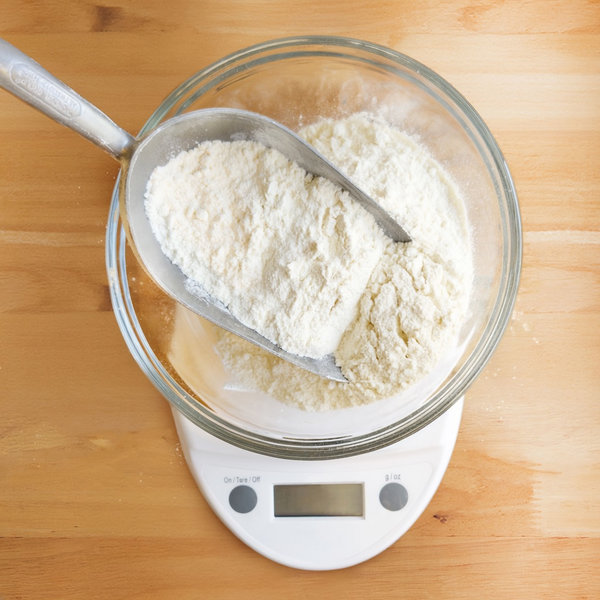
Take out your mixing bowl and scale, and weigh out 375g of warm water, 80-90°F temp, into your mixing bowl. It should feel lukewarm, not hot. Mixers add heat, so using hot water may overheat and kill the microbes in your dough.

Scroll